

You’ve probably scrolled past IGH in a text, a Snapchat reply, or a comment section and wondered what it actually means. The IGH meaning in text is simpler than it looks, though it carries more than one shade depending on who sends it and how. This guide breaks the term down from every angle, starting with where it came from and ending with how to reply to it.
Some people type it without thinking twice, others use it to close a conversation politely, and a few use it to mask irritation. We’ll walk through tone, history, platform habits, and even the less common meanings, so nothing gets left out. By the time you finish reading, you’ll know exactly what someone means the next time IGH lands on your screen.
Overview of IGH Meaning in Text
IGH is a shortened way of writing “alright.” People use it to agree with a plan, confirm they read a message, or wrap up a chat without typing a full sentence. It sits somewhere between “okay” and “sure,” carrying the same weight but with less effort behind it.
The word doesn’t belong to any single app or age group anymore, even though it started in casual, mostly younger circles. You’ll find it in group chats, comment threads, and even voice-to-text replies where people talk the way they type.
What IGH Looks Like in Conversation
A typical exchange looks like this:
- “We still on for 7?” — “Igh.”
- “I already told her.” — “Igh, that’s fine.”
Neither reply explains much, and that’s the point. The person reading it is expected to fill in the tone based on the conversation that came before.
What Does IGH Stand For in Messaging Context
IGH doesn’t stand for a phrase made of separate words the way an acronym like “LOL” does. It’s a phonetic shortcut, built by stripping down “alright” until only the sound survives. In messaging, that sound gets typed exactly as it’s spoken, which is why the spelling looks unusual to anyone unfamiliar with it.
Common Interpretations
Most readers land on one of three interpretations: agreement, mild acceptance, or a signal that the sender is ready to move on. None of these are wrong. The correct one usually depends on what was asked right before IGH showed up.
Origins of IGH and Digital Slang Evolution
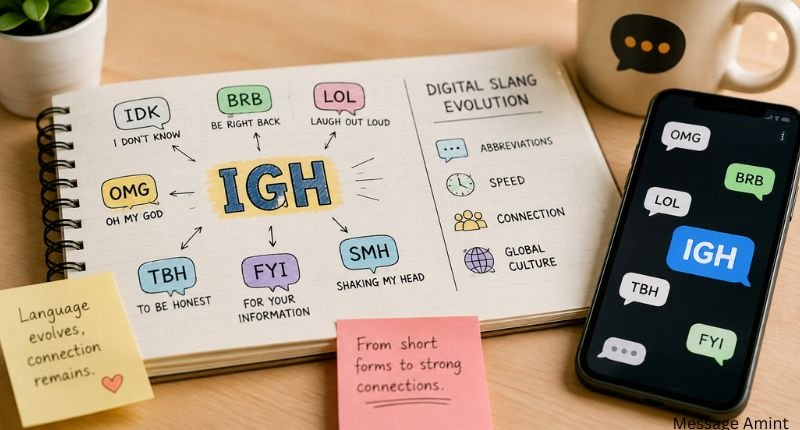
Texting slang grows out of a simple problem: typing takes longer than talking. Long before smartphones, people already dropped letters in casual speech, saying “alright” as one quick breath instead of three separate syllables. Texting just gave that habit a written form.
As character limits and thumb-typing shaped how people communicated, whole categories of shortened words appeared. Abbreviations like “brb,” “idk,” and eventually “igh” became normal because they matched how fast conversations moved once messaging replaced phone calls for everyday chatting.
Early Texting Influence
Early SMS plans charged by the message or character, so shorter texts saved money as well as time. That constraint pushed users toward creative shortcuts, and slang that started as a workaround eventually became a style choice even after unlimited texting arrived.
IGH in American Texting Culture
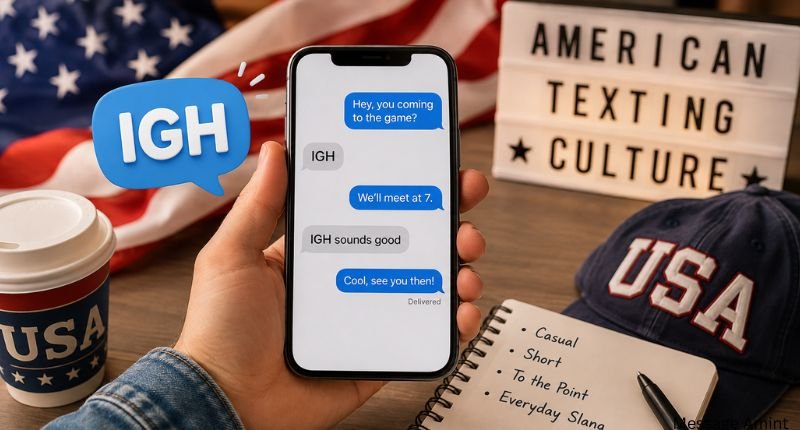
In the United States, IGH is tied closely to African American Vernacular English, where “aight” has long been a natural, spoken version of “alright.” As that speech pattern moved into music, television, and everyday conversation, it also moved into text messages, where it kept getting shorter.
How Americans Commonly Use IGH
American texters typically use IGH the way they’d use a quick nod in person. It shows up after plans are confirmed, after an apology is accepted, or after someone simply doesn’t have more to add. It rarely opens a conversation; it almost always closes one.
Emotional Meaning and Tone Behind IGH
On its own, IGH carries no built-in emotion. The feeling behind it comes from punctuation, capitalization, timing, and whatever was said just before it. A quick “Igh!” feels upbeat, while a lone “igh.” sent minutes late can feel flat or tired.
Emotional Variations
Here’s how small changes shift the mood:
- “IGH 😂” reads as playful or amused.
- “igh…” with trailing dots reads as reluctant or unsure.
- “IGH.” with a hard stop can read as annoyed or final.
Read This Article: What Does LMS Mean Texting
How IGH Is Used in Social Media and Chats
Social platforms reward short replies because scrolling and typing compete for the same thumb. IGH fits that rhythm perfectly. It works as a comment, a reply to a story, or a one-word answer in a group thread where nobody wants to write a paragraph.
Common Usage Situations
People lean on IGH when confirming plans, reacting to news without much to add, or replying to something mildly interesting without starting a longer conversation. It’s a placeholder that keeps the exchange moving.
Context Table
| Situation | Likely Meaning |
| Confirming plans | Agreement |
| Reacting to news | Mild acknowledgment |
| Ending a chat | Polite closure |
| After being told “no” | Reluctant acceptance |
IGH vs Similar Expressions (ight, ok, k)
IGH shares a lane with several other short replies, but each one lands slightly differently. “Ok” feels neutral and almost formal by comparison. “K” on its own can read as cold or clipped. IGH sits in between, casual enough to feel friendly but short enough to feel low-effort.
Common Alternatives
Alternatives people reach for instead of IGH include “sure,” “sounds good,” “bet,” and “got it.” Each one nudges the tone slightly, from enthusiastic to strictly practical, depending on the relationship between the two people texting.
| Expression | Formality | Typical Feel |
| IGH | Casual | Relaxed, low-effort agreement |
| Ight | Casual | Nearly identical to IGH, slightly softer |
| Ok | Neutral | Straightforward, no strong tone either way |
| K | Casual | Can feel abrupt or cold without extra words |
| Bet | Casual | Confident, enthusiastic agreement |
Misunderstandings and Confusion Around IGH
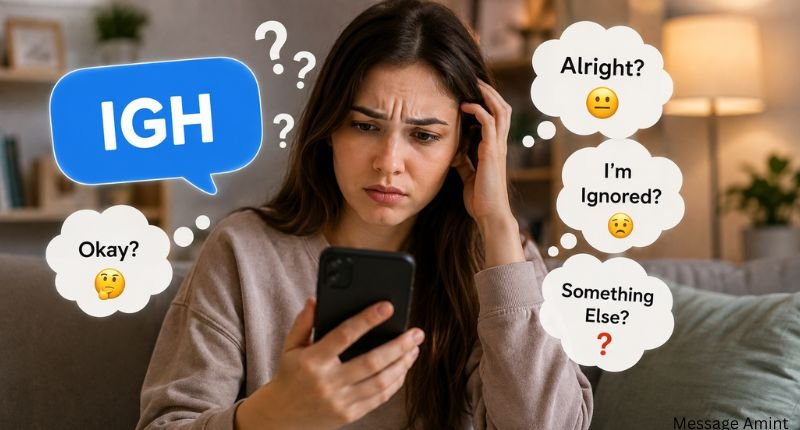
Confusion around IGH usually comes from readers assuming it always means the same thing. A short reply from a stranger reads very differently than the same reply from a close friend, yet the letters on the screen are identical.
Why Confusion Happens
Text strips away voice, facial expression, and pausing, so a word built for speech loses some of its original signal once it’s typed. Readers fill that gap with assumptions, and those assumptions aren’t always accurate.
Cultural and Cross-Language Interpretations
Outside English-speaking circles, IGH doesn’t carry any built-in meaning, since it’s a sound-based shortcut tied to spoken English. Non-native speakers sometimes mistake it for a typo, an acronym, or even a name, especially without surrounding context.
Similar Global Patterns
Other languages have their own version of this pattern. Spanish speakers shorten “vale” the same casual way, and French texters often clip “d’accord” down to “dacc.” The instinct to compress agreement into something quick is universal, even if the letters look different.
Psychological Meaning of IGH Responses
A short reply can say more about effort and attention than about the actual message. Someone typing IGH mid-conversation might simply be busy, distracted, or multitasking rather than upset or disinterested.
Possible Psychological Signals
Frequent one-word replies from someone who usually writes longer messages can hint at low energy, stress, or a shift in how invested they feel in the conversation. It’s worth noticing the pattern rather than reading too much into a single message.
Modern Usage in Memes, TikTok, and Pop Culture
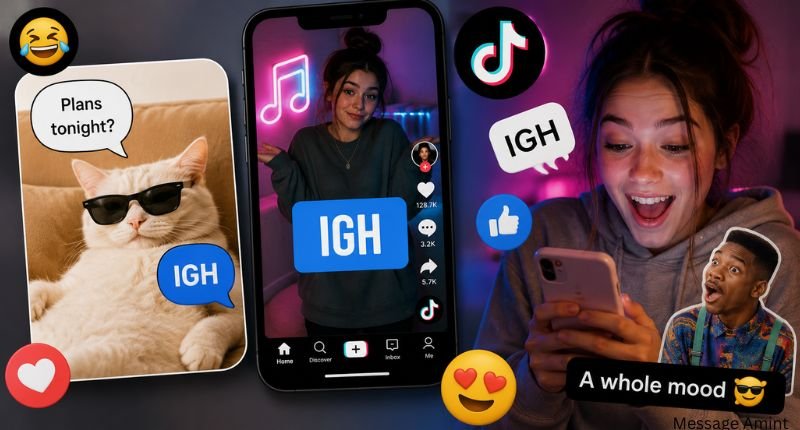
IGH has drifted into memes and short-form video captions as a stand-in for deadpan acceptance. Creators use it under clips where something unfortunate happens and there’s nothing left to say except “well, alright then.”
Where IGH Appears Today
You’ll spot it in TikTok captions under awkward or funny clips, in reply sections under celebrity posts, and in meme text overlays where a character shrugs off bad news. It’s become shorthand for calm resignation as much as agreement.
Read More: How to Respond to WSG
IGH in Relationships and Everyday Communication
In relationships, IGH often shows up during minor disagreements, plan changes, or small compromises. It can sound like genuine ease, or it can be a quiet way of avoiding a longer conversation someone doesn’t feel like having right then.
Relationship-Based Usage
A partner texting “igh, whatever works” after a schedule change usually means real flexibility. The same phrase after an argument might carry leftover frustration, even if no one wants to admit it outright.
Shifts Over Time in IGH Meaning
When IGH first spread online, it stuck closely to its spoken root and meant exactly “alright,” nothing more. Over the years, its use widened to include mild sarcasm, humor, and even quiet disapproval, depending on the community using it.
How Usage Has Changed
Younger texters today treat IGH almost like punctuation, dropping it into replies as filler rather than a direct answer. That’s a noticeable shift from its earlier, more literal use as a simple yes.
Common Examples of IGH in Conversations
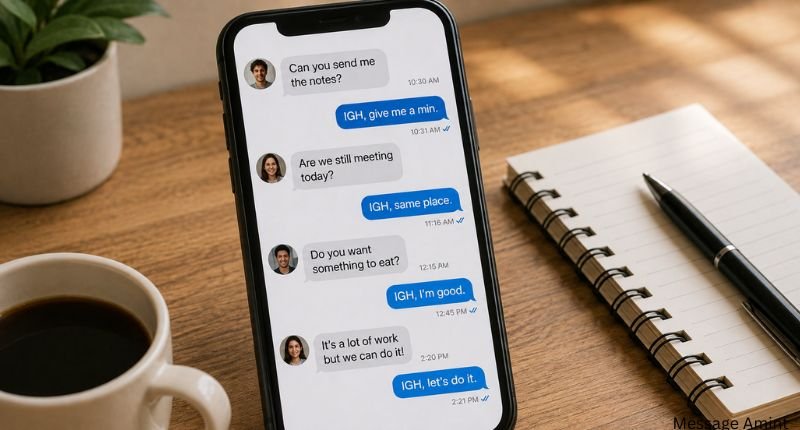
Seeing the term in context makes the meaning click faster than any definition alone.
Everyday Chat Examples
- Friend: “Movie night Saturday?” You: “Igh, I’m down.”
- Coworker: “Meeting moved to 3.” You: “igh noted.”
- Sibling: “I took the last slice.” You: “igh… fine.”
How “Alright” Became Three Letters
Spoken English drops sounds constantly. “Alright” becomes “aight” in casual speech first, losing the middle syllable entirely. Texting then dropped the vowel sound at the start, leaving “ight,” and from there, users trimmed it further into “igh” once the initial letter felt unnecessary to convey the word.
This kind of letter-shedding isn’t random. Each version still sounds close enough to the original that anyone familiar with the pattern can read it correctly without slowing down.
The Tone Is Everything
Two people can send the exact same three letters and mean completely different things. Tone in text lives in punctuation, timing, and prior context, not in the word itself. That’s why reading IGH in isolation, without the message before it, often leads to the wrong conclusion.
IGH on Snapchat, TikTok, and Instagram
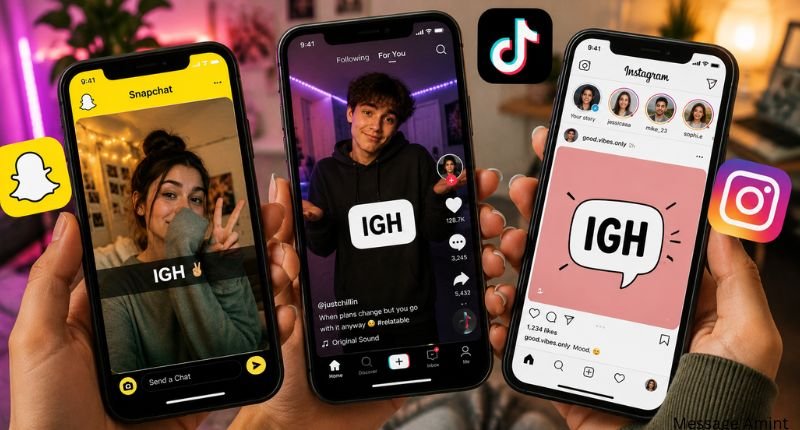
Snapchat’s fast, disappearing format encourages short replies since messages often vanish after being read. IGH fits that throwaway rhythm naturally. On TikTok, it shows up more in comments than direct messages, usually reacting to a video rather than replying to a person directly. Instagram sits in between, common in both DMs and story replies, often paired with an emoji to soften the flatness of three bare letters.
IGH from a Boy or a Girl — Is There a Difference?
The word itself doesn’t change meaning based on gender, but texting habits sometimes do. Some research on texting styles suggests women tend to pair short replies with more emojis, which can make IGH read as warmer. Men more often send it alone, which can read as neutral or distant even when no distance is intended. These are tendencies, not rules, and the relationship between two people matters far more than gender ever could.
IGH Other Meanings (Less Common But Worth Knowing)
Outside texting, IGH occasionally appears as an internal abbreviation inside companies, hospitals, or organizations, standing for whatever term fits their internal naming system. These uses aren’t standardized and won’t show up in a dictionary, so they only make sense within that specific workplace or document.
IGH vs. IGHT — Any Real Difference?
IGHT keeps one more letter from the original word “alright,” while IGH trims it further. Functionally, they mean the same thing and get used interchangeably by most texters. The choice between them usually comes down to typing speed or personal habit rather than any real difference in meaning.
Explore More: Best Reply to Sup Boy Ideas
When IGH Can Go Wrong
A reply that feels casual to the sender can feel dismissive to the reader, especially in emotionally loaded conversations. Sending “igh” after someone shares bad news, an apology, or something they care about can come across as uninterested, even if that wasn’t the intention behind it.
What About IGH in German?
German doesn’t use IGH as slang at all. The letters don’t map onto any German word or sound pattern, so a German speaker encountering it online would need the same explanation an English learner would. Any similarity is coincidental, not linguistic.
Origin & Background
Understanding where a piece of slang comes from makes it easier to use correctly and avoid sounding out of place.
Where Did IGH Come From?
IGH grew directly out of “aight,” a spoken shortening of “alright” that’s been part of casual American English for decades, long before texting existed.
Influence of Spoken English
Spoken language always moves faster than written language catches up to. Texting slang like IGH is really just spelling catching up to how people already talk.
Social Media’s Role
Platforms built around speed and brevity gave this kind of shortening a permanent home. Once one person’s shortcut got seen by thousands, it stopped being personal and became shared vocabulary.
How the Meaning Evolved
What started as a literal stand-in for “alright” slowly picked up extra shades of tone, humor, and even sarcasm as more communities adopted it for their own style of talking.
Real-Life Conversations
Reading full exchanges shows how much context shapes the word better than any isolated example can.
WhatsApp Conversation
“Can you send the file tonight?” — “igh will do.”
Instagram DM
“Your story was hilarious 😂” — “igh thank you.”
TikTok Comments
“This trend is so overdone” — “igh true but I still laughed.”
Text Message
“Running 10 minutes late.” — “igh no rush.”
Emotional & Psychological Meaning
Short replies reveal more about mental state and attention than most people realize while typing them.
What Emotion Does IGH Express?
Most often, it expresses calm acceptance, the texting version of a small shrug. It rarely carries strong emotion on its own.
Why People Use It
People reach for it because typing a full sentence feels unnecessary when a short reply gets the same point across just as clearly.
What It Reveals About Modern Communication
Communication today favors speed over detail. IGH is one small example of language adapting to a world where attention is limited and replies happen mid-scroll.
Personal-Style Scenario
Someone winding down after a long day might reply “igh” to everything, not because they’re upset, but because typing more simply feels like effort they don’t have left.
When NOT to Use It
Slang has a place, and that place isn’t everywhere.
Professional Emails
Work emails call for clear, complete language. Writing “igh” instead of “understood” or “confirmed” can come across as careless, even to a relaxed manager.
Important Conversations
Serious topics, apologies, or emotional discussions deserve full sentences. A one-word slang reply can feel like the topic wasn’t taken seriously.
Cross-Cultural Communication
When texting someone unfamiliar with English slang, spelling things out clearly avoids confusion that a shortcut like IGH would only create.
Variations / Types
Slang rarely settles into one fixed spelling, and IGH has several close relatives.
Aight
The most direct ancestor of IGH, closer to how the word actually sounds when spoken aloud.
Ighh
An extended version, often used to add emphasis or a slightly longer, more relaxed tone.
Ight
One letter longer than IGH, keeping the initial vowel sound intact.
Aite
An older spelling variant, less common today but still seen in older forum posts and comments.
Aiight
A stretched-out version meant to mimic a drawn-out, casual way of saying the word out loud.
Igh Bet
Combines agreement with confidence, similar to saying “okay, for sure.”
Igh Cool
Pairs acceptance with mild enthusiasm, slightly warmer than IGH alone.
Igh Then
Often signals reluctant agreement, especially after a disagreement or change of plans.
Igh Bro
A casual, friendly version typically used between male friends.
Igh Yeah
Adds a touch of certainty, making the agreement feel more definite than a plain IGH.
Here’s a quick side-by-side view of all the variations covered above:
| Variation | Closest Meaning | Common Setting |
| Aight | Alright | Spoken speech, older posts |
| Ighh | Alright (stretched) | Casual texts, emphasis |
| Ight | Alright | Everyday texting |
| Aite | Alright | Older forums, dated spelling |
| Aiight | Alright (drawn out) | Playful or exaggerated tone |
| Igh Bet | Confirmed agreement | Confident plans |
| Igh Cool | Warm acceptance | Friendly exchanges |
| Igh Then | Reluctant agreement | After disagreement |
| Igh Bro | Friendly agreement | Between close friends |
| Igh Yeah | Certain agreement | Definite confirmation |
Regional & Cultural Usage
Slang spreads differently depending on where and how people communicate day to day.
Western Culture
In the US and UK, IGH is widely recognized, especially among younger texters influenced by American media and music.
Asian Culture
In many Asian countries, English slang like IGH appears mostly among younger, internet-fluent users who consume a lot of Western content online.
Middle Eastern Culture
Usage here tends to stay within bilingual young adults who mix English slang into conversations otherwise conducted in Arabic or another local language.
Global Internet Usage
Because English dominates global internet culture, terms like IGH travel far beyond their original spoken roots, even reaching people who don’t speak English fluently.
Generational Differences
Gen Z
Gen Z treats IGH almost like a reflex, using it constantly and rarely thinking about its literal meaning.
Millennials
Millennials use it too, but often more deliberately, aware that it’s slang rather than treating it as default vocabulary.
See More: Current Phase of the Moon Emoji Meanings
Is It Safe for Kids?
IGH itself carries no harmful or explicit meaning. It’s simply a shortened way of saying “alright,” making it harmless in most everyday conversations, including those involving children and teenagers.
Understanding the Context
The concern for parents isn’t the word itself but the habit of relying on vague, one-word replies that can hide how a child is actually feeling. Watching for patterns matters more than the slang itself.
Alternatives and Synonyms for IGH
When IGH doesn’t quite fit the moment, plenty of close alternatives carry a similar tone: “sure,” “sounds good,” “got it,” “bet,” “no problem,” and the fuller “alright” itself. Choosing between them usually comes down to how warm or brief you want the reply to feel.
Final Words
The IGH meaning in text comes down to one simple idea: a fast, casual way of saying “alright.” Its tone shifts with punctuation, timing, and the relationship between the two people texting, not with the letters themselves. Once you know its roots and its patterns, reading it correctly becomes second nature.
Whether it shows up in a WhatsApp chat, a TikTok comment, or a quick Snapchat reply, IGH will keep adapting the way all texting slang does. Understanding its context now means you’ll never have to guess what someone really meant by three short letters again.
FAQs
What does IGH mean in text messages?
The IGH meaning in text is simply a short way of saying “alright,” used to agree, confirm, or close out a conversation.
Is IGH the same as IGHT?
They mean the same thing. IGHT keeps one extra letter from “alright,” while IGH is the shorter, trimmed-down version.
What does IGH mean on Instagram?
On Instagram, IGH usually shows up in DMs and story replies as a quick, casual way to acknowledge a message.
Is IGH rude?
Not inherently. It can feel short or dismissive in serious conversations, but in casual chats it’s a normal, neutral reply.
What does IGH mean on TikTok?
On TikTok, IGH often appears in comments as a relaxed reaction to a video, rather than a direct reply to a person.
Can IGH be used professionally?
It’s best avoided at work. Professional messages read better with full words like “understood” or “confirmed.”
Does IGH always mean okay?
Usually, yes, but punctuation and prior context can shift it toward reluctance, sarcasm, or mild frustration.
What does IGH mean in text from a boy?
From a boy, IGH usually still means “alright.” Some boys send it alone more often, which can read as neutral rather than cold.
What does IGH mean from a girl?
From a girl, IGH carries the same core meaning, though it’s often paired with emojis that soften or add warmth to the reply.
What does IGH mean on Snap?
On Snapchat, IGH works as a fast, throwaway reply that fits the app’s quick, disappearing message style.
Is IGH the same as “ugh”?
No. “Ugh” expresses frustration or annoyance, while IGH is a shortened form of “alright” and generally more neutral.
What does IGH mean in German?
It has no meaning in German. The letters don’t correspond to any German word, so the term stays purely an English texting shortcut.

Iqra Mubeen is the Founder of Message Amint, with 3+ years of experience in SEO, content writing, and guest posting. She specializes in creating engaging, easy-to-share content around everyday communication — from heartfelt messages to relationship wishes. Her work focuses on helping readers express their feelings in the simplest, most meaningful way.