

You open a chat. Someone replies with just one word: “tsk.” No emoji. No explanation. Just that.
If you paused and wondered what it meant, you are not alone. This small sound has confused people for years. It shows up in DMs, comments, and group chats all the time.
This sound is old. It existed long before phones. People used to make this click with their tongue in real life to show they were unhappy. Today, the same sound shows up in texts.
This guide explains the full TSK meaning in text. You will learn where it came from. You will learn how it changes across apps like WhatsApp and TikTok. You will also learn how to reply when someone sends it to you.
What Does TSK Mean in Text & Chat?
In short, the TSK meaning in text is a written copy of a tongue-click sound. It shows disappointment, annoyance, or mild disapproval.
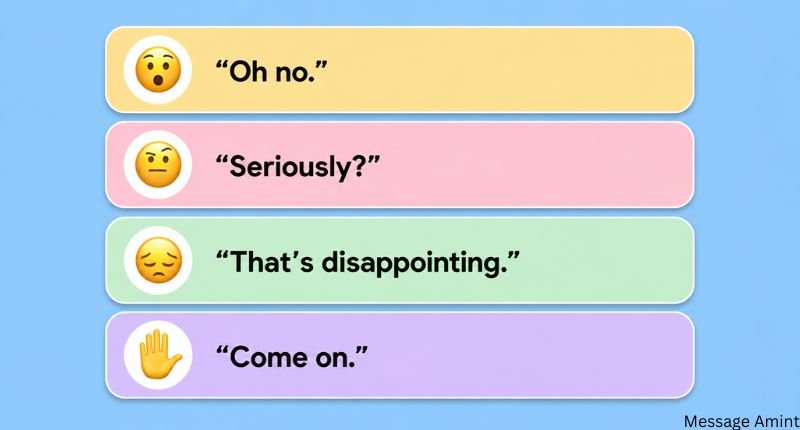
When someone types “tsk,” they are copying a real sound. It is the sharp click people make with their tongue when they are unhappy. In online conversations, it works like saying:
- “Oh no.”
- “Seriously?”
- “That’s disappointing.”
- “Come on.”
The same word can feel very different depending on who sends it. A friend might tease you with it. A partner might use it to show real frustration. The words look the same. The feeling behind them is not.
Quick Examples
- “You forgot my birthday? Tsk tsk 😒”
- “Tsk, that was not a smart move.”
- “You skipped class again? Tsk!”
People often write it twice, as “tsk tsk.” This adds emphasis. It sounds more dramatic. It is usually playful, not truly angry.
Full Form, Stands For & Short Meaning of TSK
TSK does not have an official full form. It is a sound. It is not a true acronym. That one fact clears up most of the confusion around it.
Short Meaning of TSK
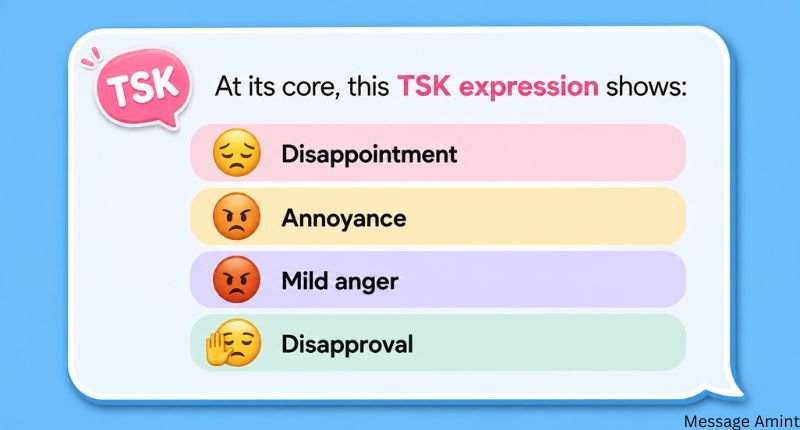
At its core, this TSK expression shows:
- Disappointment
- Annoyance
- Mild anger
- Disapproval
Does TSK Stand for Anything?
No, officially it does not. Dictionaries like Merriam-Webster and Cambridge Dictionary define “tsk” as a sound word. It shows disapproval. It is not a TSK abbreviation with hidden words behind it.
Some people online make up joke full forms. One example is “Too Silly, Kid.” These are just memes. They are not real definitions. Believing them is a common mistake.
Why People Use TSK Instead of Full Sentences
A full sentence takes more effort to type. “I am disappointed in you” can feel too heavy for a casual chat. A short reaction word does the same job in less time. That is why this TSK sound fits so well into fast texting and quick comments.
Read More: LBS Meaning in Text
Is TSK Formal or Informal?
TSK is informal. You will not see it in business emails. You will not see it in official documents. It belongs to casual texting and social media platforms. If you use it in a work email, it will feel out of place.
TSK Meaning From a Girl in Text
When a girl sends “tsk,” it is usually a quick reaction. It can mean mild disappointment. It can mean playful teasing. There is no single fixed meaning. The real message depends on what was said before it.
For example, “Tsk, you forgot again 😂” sounds playful. But a plain “tsk.” with no emoji can feel more serious, especially in a tense chat. Her texting style and the emoji she uses tell you more than the word alone.
Is TSK Flirty?
On its own, TSK is not flirty. But paired with a laughing emoji or a teasing follow-up, it can feel light and playful. That flirty feeling comes from the context. It does not come from the word by itself.
TSK Meaning From a Guy in Text
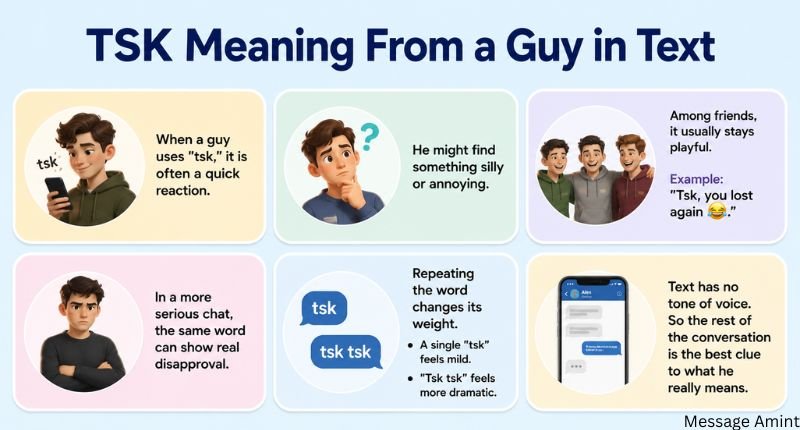
When a guy uses “tsk,” it is often a quick reaction. He might find something silly or annoying. Among friends, it usually stays playful. An example is “Tsk, you lost again 😂.” In a more serious chat, the same word can show real disapproval.
Repeating the word changes its weight. A single “tsk” feels mild. “Tsk tsk” feels more dramatic. Text has no tone of voice. So the rest of the conversation is the best clue to what he really means.
Is TSK Flirty?
Just like with girls, a guy’s “tsk” turns flirty through context. A joke, a laughing emoji, or playful back-and-forth can add that feeling. Without those signals, it is usually just plain, casual disapproval.
Origin, History & First Known Use of TSK
Before texting, this sound already had a long history. Let’s look at where it truly began.
Historical Background
The click behind “tsk” is not new. Humans have used tongue clicking for centuries. People used it to show frustration or disappointment long before slang existed. Writers later added it to books, comics, and scripts. They used it to show a character’s reaction. Old versions like “tsk-tsk” and “tut-tut” appeared in stories long before the internet.
Here is something most guides skip. This click is not just symbolic. Linguists call it a dental click consonant. In the International Phonetic Alphabet, it is written as [ǀ]. In some African languages, like Xhosa and Zulu, click sounds like this are real speech sounds. They form actual parts of words, not just reactions. This gives “tsk” real linguistic depth. Most short internet slang does not have this kind of history.
Internet & Texting Era
Texting became common in the 2000s. People began typing “tsk” in chats and forums. It was short. Its meaning was clear. That made it easy to use online. Social media spread it even further. Meme culture kept it alive as newer slang came and went.
Why It Survived Online
Many old expressions faded away online. “Tsk” stayed popular because it:
- Feels natural, not invented for the internet
- Shows a clear emotion in one word
- Fits well into jokes and sarcasm
- Matches the fast pace of memes
This word existed in real speech long before internet slang was a thing. That is why people of different ages still understand it today.
How People Use TSK in Daily Conversations
TSK shows up in many everyday moments. Its tone depends on what caused it.
Common Situations
When Someone Makes a Mistake
“You sent the message to the wrong person? Tsk 😅”
When Someone Acts Silly
“Tsk tsk, you never listen.”
Friendly Teasing
“You lost again? Tsk!”
Light Disapproval
“Tsk… that was risky.”
In most of these cases, TSK is not harsh. It sits between a joke and a small complaint. It rarely feels like a true insult.
Tone Matters
Small details often shape the tone and context of a message:
- Emojis can soften or sharpen it
- Capital letters can signal frustration
- Extra punctuation can add drama
- The relationship between the two people matters too
For example, “tsk :)” feels playful. “TSK.” can feel angry. “tsk tsk 😂” usually feels like teasing.
Different Tones of TSK
The exact style of the word often reveals the mood behind it:
| Style | Likely Tone |
| tsk (lowercase, no punctuation) | Mild, casual |
| TSK (all caps) | Frustrated or serious |
| tsk tsk | Dramatic or exaggerated |
| tsk… | Passive-aggressive or disappointed |
| tsk! | Sharp, immediate reaction |
| tsk 😂 | Playful, joking |
| tsk 😢 | Genuine, sad disappointment |
| tsk 🙄 | Sarcastic |
A small change, like adding one emoji, can flip the entire meaning of a message.
TSK Meaning Across WhatsApp, Instagram, TikTok & Snapchat
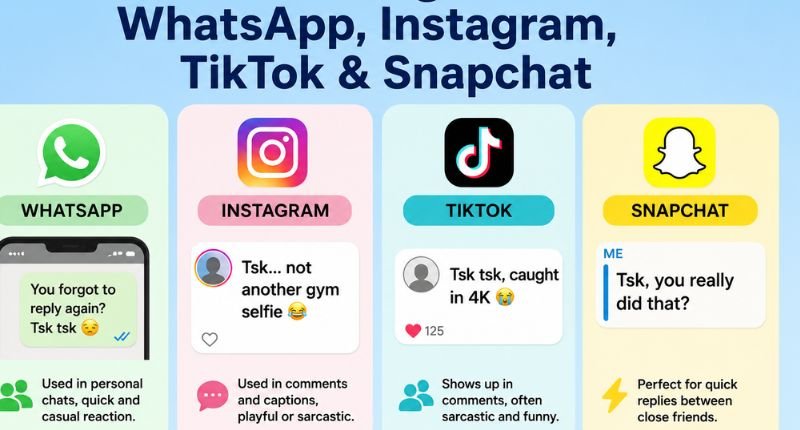
The core meaning of TSK stays mostly the same across apps. But how people use it can shift a little.
On WhatsApp, TSK usually appears in personal chats. It shows up between friends or family. It is often a quick, casual reaction.
Example: “You forgot to reply again? Tsk tsk 😒”
On Instagram, people use TSK in comments and captions. It often has a playful or sarcastic tone.
Example: “Tsk… not another gym selfie 😂”
TikTok
On TikTok, TSK shows up a lot in comments. It is often sarcastic, used to call out something funny.
Example: “Tsk tsk, caught in 4K 😭”
Snapchat
Snapchat chats move fast. Short words like TSK fit well into quick replies between close friends.
Example: “Tsk, you really did that?”
Across all four apps, the core feeling stays the same. What changes is the setting. A private WhatsApp chat can hold more real annoyance. A public TikTok comment almost always leans sarcastic.
Read Also: IGH Meaning in Text
Different Meanings of TSK in Other Fields
Outside of texting, the letters TSK show up in a few other places. These uses are narrow. Most people will never see them outside a specific field.
In Medicine
In clinical settings, TSK often refers to the Tampa Scale of Kinesiophobia. This is a tool used to measure fear of movement. It is often used after an injury or during pain treatment.
In Physics and Aviation
Outside medicine, TSK has no single, well-known meaning. Like many three-letter labels, it sometimes appears as a project code or internal shorthand. This can happen in technical documents or equipment names. These uses are not standard. They change by company or system. Unlike the medical meaning, there is no single fixed definition here.
In Technology
Some companies use “TSK” as an internal project code. This use has nothing to do with texting. It is usually specific to that one company.
In Gaming
Gamers often use TSK when they miss a shot or make a bad call. It works the same way it does in normal chat.
Example: “Tsk, wrong strategy bro.”
In Entertainment
Movies, comics, and subtitled shows often use “tsk.” It shows a character’s tongue-click reaction. This often happens during moments of disapproval or quiet frustration.
Relevance in Online Conversations & Dating Apps
On dating apps, a short “tsk” can work as light flirting. It is a low-effort way to tease someone. A message like “Tsk, you kept me waiting” can feel playful, not angry. This is common early in a chat with someone new.
Dating app messages are usually short. A single reaction word carries feeling without needing a long reply. This is why it works so well there.
The same idea applies to other digital conversations too. A short word can carry emotion fast. That is exactly why it fits so well into quick, casual messaging.
Common Confusions, Mistakes & Wrong Interpretations
A few mix-ups come up again and again with this word. Most are easy to avoid once you know them.
Common Mistakes
Thinking It Is an Acronym
Not all internet slang stands for something. TSK is one word that truly does not, no matter what joke explanations you see online.
Assuming It Is Always Rude
TSK is often playful, especially between close friends. Reading it as an insult can say more about the reader than the sender.
Confusing It With “TSM” or “TYSK”
These are separate words. They look similar but mean different things.
Misreading Tone
Text has no vocal tone, so “tsk” is easy to misread. “Tsk 😂” clearly feels playful. A bare “tsk.” can feel like real annoyance, since nothing softens it.
Overusing It
Using TSK in almost every message can feel too dramatic. The word can lose its power the more often it appears.
Explore Also: What Does LMS Mean Texting
Similar Terms, Alternatives & Related Slang
Other words carry a similar feeling to TSK. Each one still has its own flavor.
Similar Expressions
- Sigh
- Bruh
- SMH (Shaking My Head)
- Ugh
- Tut tut
- Wow…
Differences Between Them
TSK vs SMH
| TSK | SMH | |
| Origin | Real-life sound (tongue click) | Internet-born abbreviation |
| Feel | More emotional, conversational | More detached, internet-native |
| Common use | Texting, comments, captions | Comments, reaction posts |
TSK vs Sigh
| TSK | Sigh | |
| Core emotion | Disappointment, disapproval | Tiredness, resignation |
| Typical tone | Sharp, quick reaction | Slower, drawn-out feeling |
Related Slang Examples
- “Bruh, tsk 😭”
- “SMH, you did it again.”
- “Ugh, not this again.”
People often mix these words in one message. This adds extra feeling to a short reaction.
Examples of TSK in Real Chat Situations
Here is how TSK shows up in different chats. It shows just how flexible the word can be.
Friendly Chats
- “You ate my fries again? Tsk tsk 😂”
- “Tsk, you forgot the homework.”
Relationship Chats
- “Tsk… you didn’t even call me 😒”
- “You’re late again, tsk!”
Gaming Chats
- “Tsk, we almost won that match.”
- “Bad move bro, tsk.”
Social Media Comments
- “Tsk tsk, internet never forgets 😭”
- “You really posted that? Tsk!”
Funny Examples
- “Tsk… caught cheating in Monopoly 😂”
- “Tsk tsk, someone’s in trouble.”
The same word fits each situation without needing a rewrite. That is part of why it has stayed useful for so long.
When Should You Use TSK? / When You Should NOT Use TSK
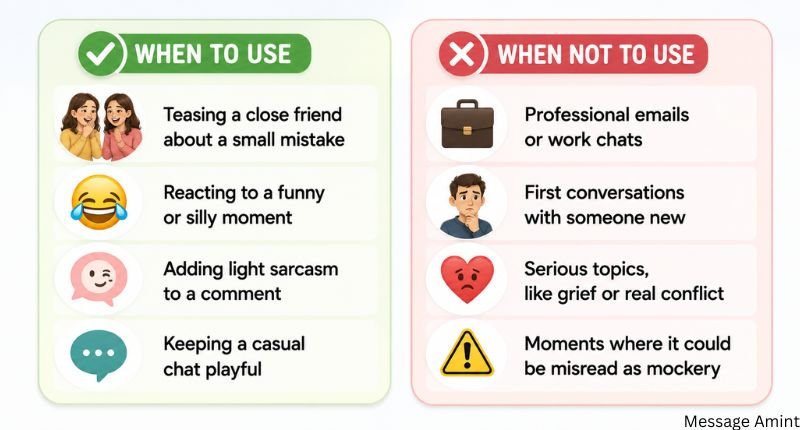
Knowing when this word fits can help you avoid awkward moments.
When To Use
- Teasing a close friend about a small mistake
- Reacting to a funny or silly moment
- Adding light sarcasm to a comment
- Keeping a casual chat playful
When Not To Use
- Professional emails or work chats
- First conversations with someone new
- Serious topics, like grief or real conflict
- Moments where it could be misread as mockery
Here is a simple test. If you would not click your tongue out loud in that moment, do not type “tsk” either.
How to Reply When Someone Says TSK
The right reply depends on how the “tsk” was meant.
Funny Replies
- “Oops 😅”
- “My bad!”
- “Don’t judge me 😂”
Playful Replies
- “You love me anyway.”
- “Relax, detective 🕵️”
Serious Replies
- “Sorry about that.”
- “I’ll fix it.”
Casual Responses
- “Haha true.”
- “Fair enough.”
If the other person seems to be joking, match their tone. A light reply keeps the chat easy. If it feels serious instead, a short, honest reply works better than a joke.
Discover More: How to Respond to WSG
Is TSK Still Popular? Trends & Online Usage
Yes. TSK is still active in online conversations in 2026. It is not new, but it has not faded either.
Why It Remains Popular
- It feels natural, not forced
- It works well in fast chats
- It adds personality to a plain message
- It fits into meme culture without feeling old
Popular Among Different Ages
Unlike a lot of Gen Z slang, TSK is known across many age groups. It existed in real speech long before texting apps. Older users often understand it right away.
Modern Internet Usage
You can still find it in:
- TikTok comment sections
- Instagram captions
- Meme pages
- Gaming chats
- WhatsApp conversations
New slang comes and goes fast. TSK has stayed useful because it packs real emotion into one small word.
FAQs
What does TSK mean in texting?
It shows disappointment, annoyance, or mild disapproval. This is the core TSK meaning in text.
Is TSK a full form?
No, it is not an acronym. It is a sound, not a set of initials.
Does TSK stand for anything?
No, not officially. Any “full forms” online are just jokes.
Is TSK rude?
Not usually. It is often playful between friends.
Where is TSK used?
On texting apps, WhatsApp, Instagram, TikTok, Snapchat, and in gaming chats.
What does “tsk tsk” mean?
Repeating it adds emphasis. It feels more dramatic or teasing.
What does “tsk tsk” mean in Gen Z slang?
It is often used as a joke about a small mistake, not real anger.
Is TSK popular on TikTok?
Yes. It shows up often in comments, usually in a sarcastic way.
Can TSK be sarcastic?
Yes. People often use it for playful jokes or light criticism.
What does TSK mean in slang?
A short word that shows disapproval or mild annoyance.
How do you say TSK?
As a quick tongue click, similar to “tut-tut.”
What is the meaning of “tks” in chat?
It usually means “thanks.” Do not confuse it with “tsk.”
Final Words
At its heart, the TSK meaning in text is simple. One small sound does a big job. It can show disappointment, teasing, or disapproval, all in one word. It is not a true abbreviation. But its roots go back far beyond texting, all the way to a real click sound used in speech.
From WhatsApp chats to TikTok comments, TSK still shows up in casual talk, memes, and playful jokes. Tone, punctuation, and the people involved all shape how it feels. That is why reading the full chat matters more than the word alone. Now you know where it came from, how it shifts across apps, and how to reply with confidence.

Iqra Mubeen is the Founder of Message Amint, with 3+ years of experience in SEO, content writing, and guest posting. She specializes in creating engaging, easy-to-share content around everyday communication — from heartfelt messages to relationship wishes. Her work focuses on helping readers express their feelings in the simplest, most meaningful way.